


Silver · Care
Why silver goes dark.
Silver that darkens over time is one of the most common worries about silver jewellery. In almost every case it is tarnish: a normal chemical property of the metal, not a defect. Genuine silver is exactly the metal that tarnishes.
Last reviewed
What tarnish is
Tarnish is a very thin layer that forms on the surface of silver when it reacts with sulphur-containing gases in the air, mainly hydrogen sulphide and carbonyl sulphide. The layer is silver sulphide. On sterling silver it also contains copper sulphide, because the copper in the alloy is more reactive than silver. That is why sterling silver tarnishes faster than pure silver.
Tarnish sits on top of the metal. The silver underneath is still there; it is not rusting away or going bad.
Why it changes colour
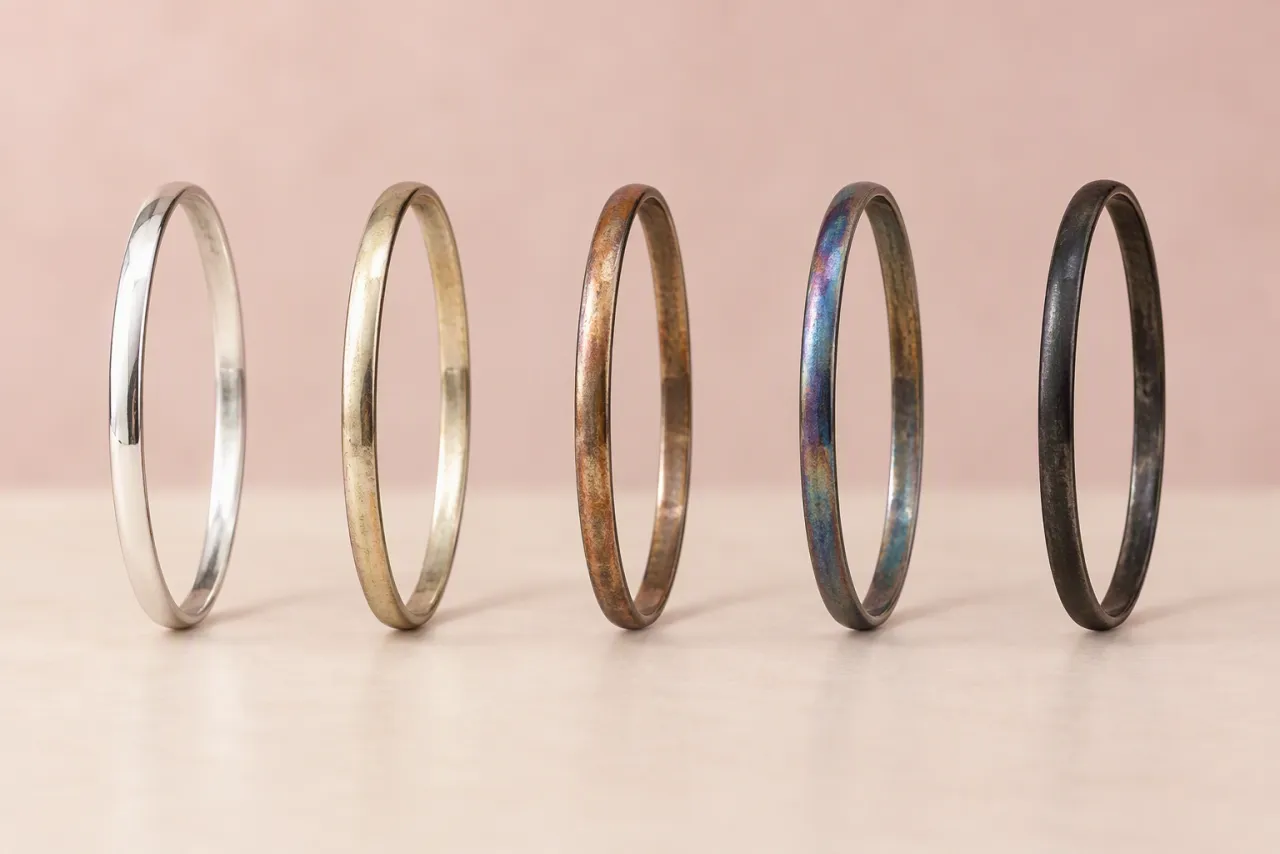
The colour depends on how thick the layer has grown. The Canadian Conservation Institute explains that as tarnish thickens from about 10 to 100 nanometres, silver turns from yellow, through red-brown, to blue. Beyond about 100 nanometres it looks black. These are interference colours, similar to the colours in a film of oil on water.
So a faint golden or brownish tint is early tarnish, and a black surface is simply a thicker layer of the same thing.
What speeds tarnish up
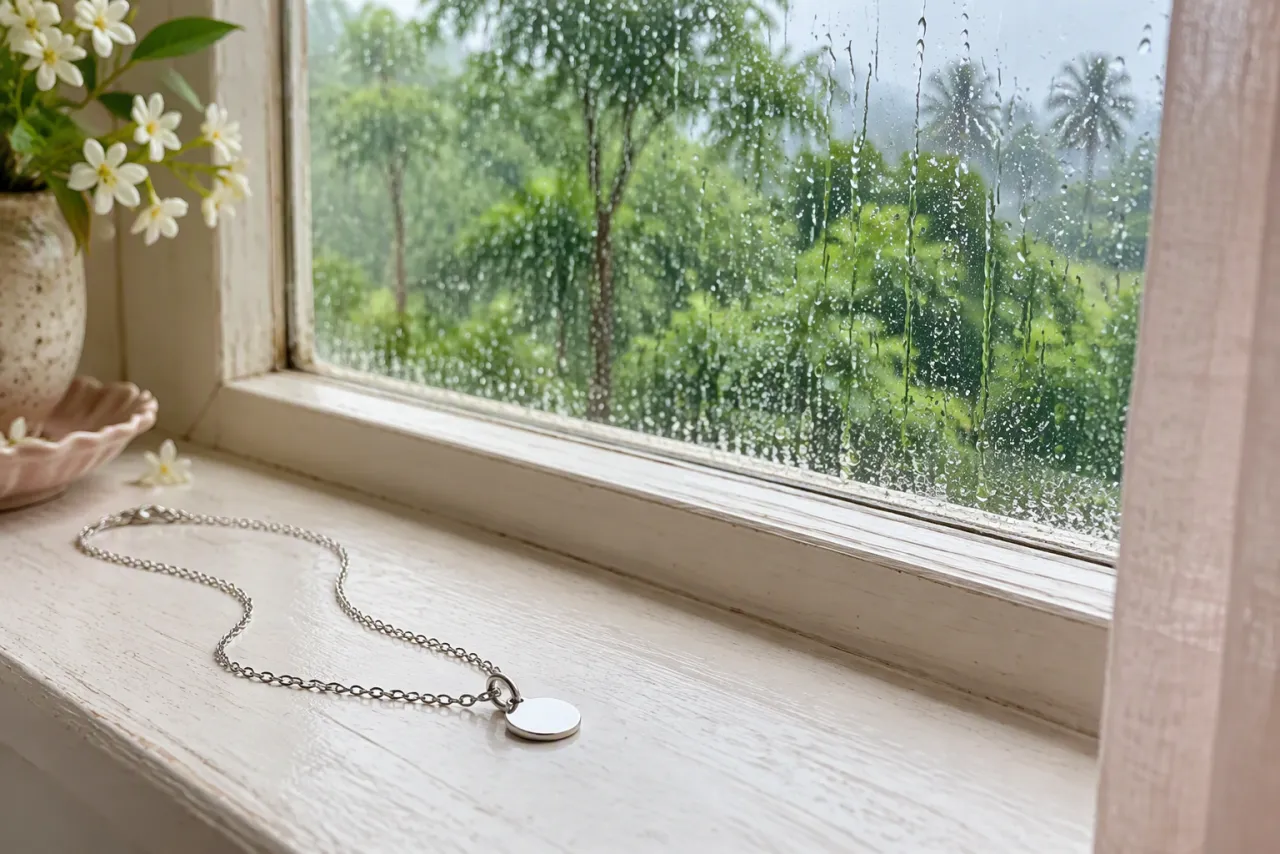
- Humidity. Silver tarnishes faster as relative humidity rises, which is why humid weather and the monsoon are hard on silver.
- Air pollution. Sulphur gases are part of everyday air, and some environments have more of them.
- Sweat and skin. People are themselves a source of sulphur compounds, and salts from skin can leave marks that darken.
- Rubber. Vulcanised rubber, including rubber bands, latex and rubber gloves and erasers, gives off sulphur compounds.
- Wool and felt. These release sulphur as well, so they are poor linings for silver storage.
- Some foods, such as eggs.
- Certain paints, glues and clays used in cupboards and display areas.
- Cosmetics, perfume and household chemicals, which can also affect finishes and stones.
Why two people see different results
Two people can wear the same design and see very different results. Tarnish depends on local air and humidity, skin chemistry, the products each person uses, how often the piece is worn and how it is stored.
What tarnish does not mean
- It does not mean the jewellery is fake.
- It does not mean the silver is damaged or of poor quality.
- It does not mean the piece is ruined. Tarnish can usually be removed.
Plating changes the picture. Rhodium plating helps protect silver from tarnish, but it is not permanent. Read plating, finishes and stones.
Prevention beats removal
Every time tarnish is polished or chemically removed, a very small amount of the underlying silver goes with it. Preventing tarnish is therefore better for your jewellery than repeatedly removing it. Read cleaning and storing silver for simple habits that slow it down.
Sources
General education, checked against these published standards and references. Each product page states that piece's own materials and care.
- Canadian Conservation Institute: Understanding how silver objects tarnish
- Canadian Conservation Institute Notes 9/7: Care of silver
- Canadian Conservation Institute Notes: Storage of metals
- Canadian Conservation Institute: Metal objects, silver chloride from fingerprints
- Franey, Kammlott and Graedel, The corrosion of silver by atmospheric sulfurous gases, Corrosion Science, 1985
- GIA: White gold vs silver, rhodium plating protects silver from tarnishing
Next: Cleaning and storing silver
A safe cleaning routine, the methods to avoid, the trouble with the foil trick, and storage that slows tarnish.