


Silver · Choose
What is on the surface.
Two pieces that look almost the same in a photograph can be very different products. The metal underneath, the surface finish and the stones all matter. Here is how to tell them apart.
Last reviewed
Solid silver and plated jewellery
Silver jewellery is made from a silver alloy, such as 925 sterling silver, all the way through. Plating on top does not change that.
Plated jewellery has a thin layer of one metal over a base of another. The base may be silver, brass, copper or another metal, depending on the product. That is why "gold-plated silver" and "gold-plated brass" are very different things, even when they look identical.
Plating wears gradually. How quickly depends on its thickness, how often the piece is worn, friction against skin and clothing, contact with chemicals, and individual skin chemistry.
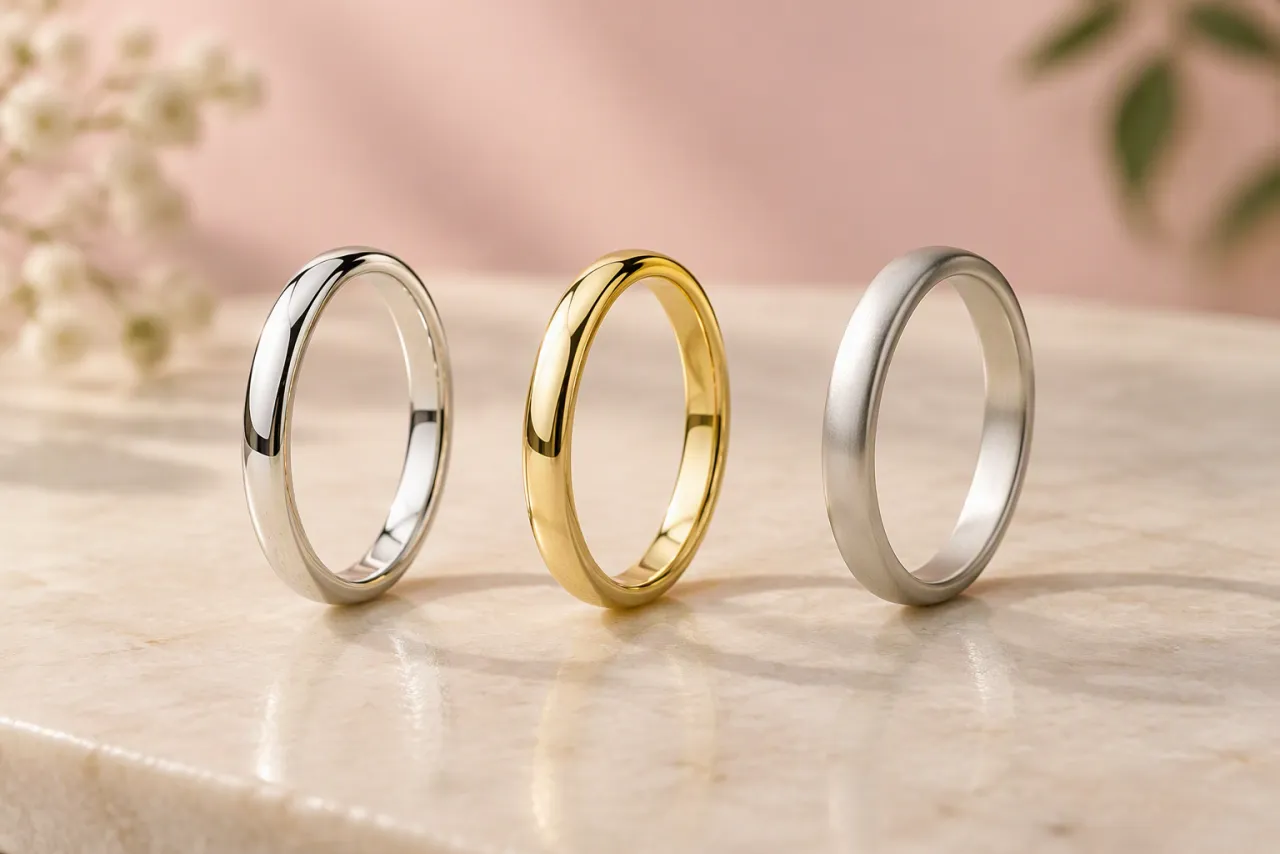
Gold-plated, vermeil and gold-filled
These terms are defined most precisely in the United States Federal Trade Commission's Jewelry Guides. They are a useful reference for what the words are meant to mean, although they are US guidance rather than Indian law.
- Gold-plated describes a thin gold surface layer. The US guides set no minimum thickness, only that it is reasonably durable.
- Heavy gold electroplate means gold of at least 10 karat and at least 2.5 microns thick.
- Vermeil means sterling silver coated with gold of at least 10 karat, at least 2.5 microns thick. The base must be sterling silver.
- Gold-filled means a layer of gold of at least 10 karat that makes up at least one-twentieth of the total metal weight. It is much thicker than plating.
When a description says only "gold-tone", it describes a colour, not a material. If the base metal is not stated, ask.
Rhodium plating
Rhodium is a platinum-group metal: hard, bright white and resistant to tarnish. A thin rhodium layer on silver gives a brilliant white shine and helps protect the silver from tarnishing.
Plating does not last forever. Like any plating, rhodium can wear away over time, most noticeably on the parts of a piece that rub against skin or surfaces. A rhodium-plated piece is more resistant to tarnish, not tarnish-proof, and a worn finish can be renewed by re-plating.
The US Jewelry Guides treat failing to disclose rhodium plating on precious-metal jewellery as deceptive. Wherever you shop, a good description tells you when rhodium is present.
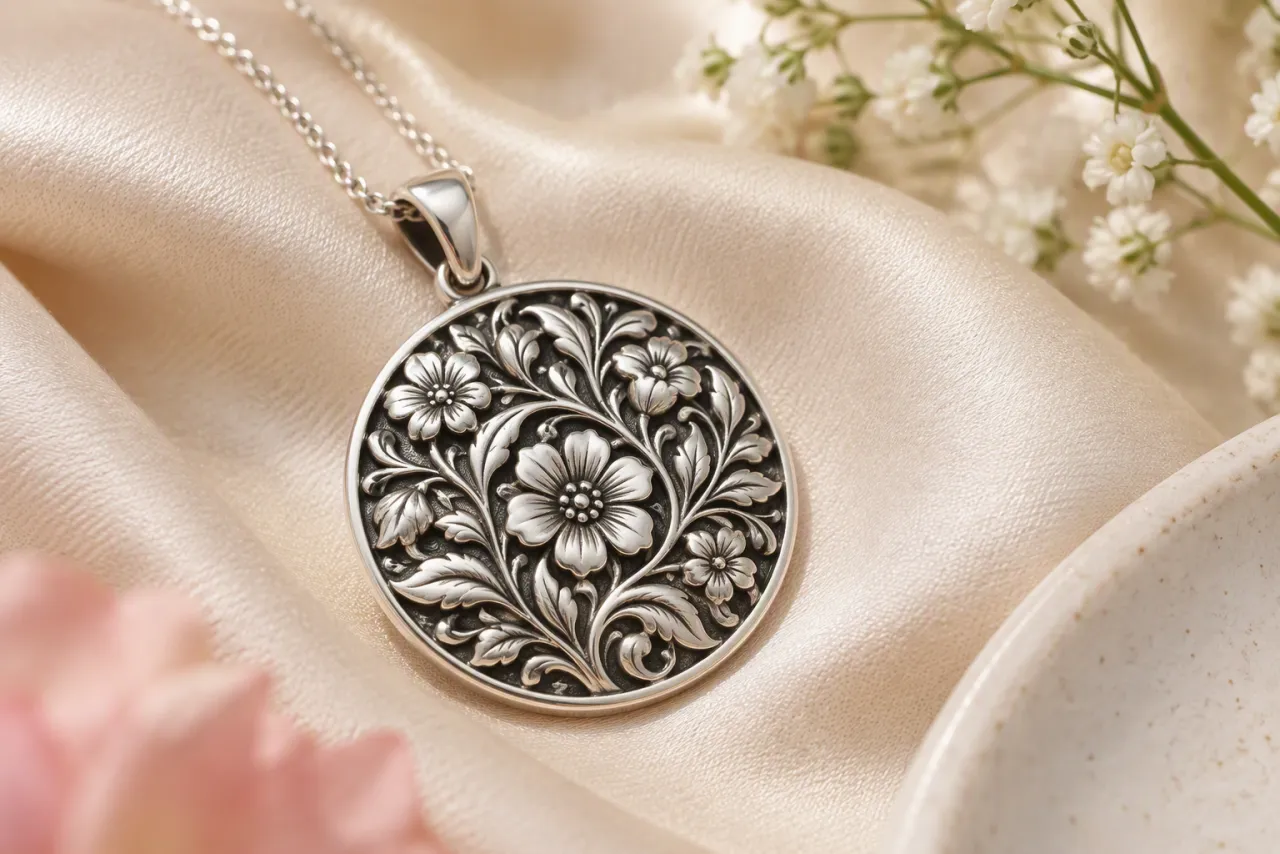
Oxidised silver
Oxidised silver is darkened on purpose, usually in the recesses of a design, to add contrast and an antique look. The name is a misnomer: the dark layer is silver sulphide, the same compound as natural tarnish. It is created with sulphur compounds such as liver of sulphur.
Because it is the same material as tarnish, aggressive cleaning removes it. Conservation guidance warns that silver dips over-clean decorated silver and strip the darker tone from recesses. Clean oxidised pieces gently with a soft cloth, and avoid dips and home electrochemical methods.
Moissanite
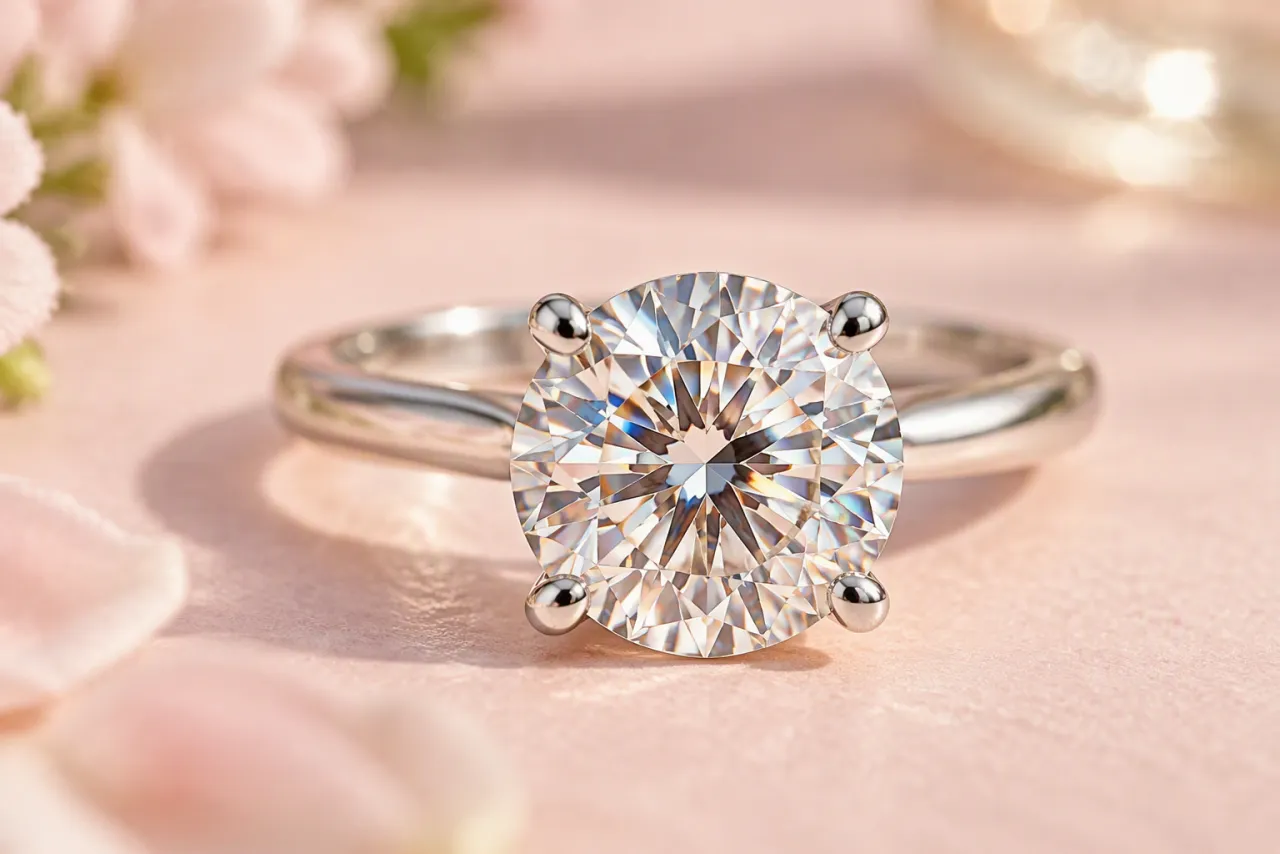
Moissanite is silicon carbide, a different material from diamond. Natural moissanite was first found in 1893 in a meteorite crater and is extremely rare. All moissanite used in jewellery is laboratory-created.
According to the Gemological Institute of America (GIA):
- Hardness: 9¼ on the Mohs scale, just below diamond at 10. That makes it well suited to everyday jewellery.
- Brilliance: its refractive index, about 2.65 to 2.69, is higher than diamond's 2.42.
- Fire: its dispersion, 0.104, is much higher than diamond's, so it shows strong flashes of rainbow colour.
- Double refraction: looking through the stone under magnification, facet edges appear doubled. Diamond does not do this.
- Weight: it is lighter than diamond, so a moissanite of the same size weighs less.
Some basic handheld thermal testers react to moissanite as if it were diamond. Gemmological laboratories separate the two with magnification and spectroscopy. A trustworthy description always names moissanite as moissanite and never implies it is a mined diamond.
Laboratory-grown and natural stones
A lab-grown stone is the same material as its mined counterpart, formed in a laboratory instead of the ground, and it should be clearly described as lab-grown or laboratory-created. A stone that only imitates the look of another should be described as simulated or imitation. Cubic zirconia is synthetic rather than lab-grown, because it is not the same material as the diamond it is often used to imitate. A description should tell you exactly which kind of stone you are buying.
Caring for set stones
Stones change how a piece should be cleaned. GIA advises against ultrasonic cleaners for organic gems such as pearl, coral and amber, and for stones that are fracture-filled, oiled or heat-sensitive, such as emerald, opal and turquoise. Ultrasonic and steam cleaning can also loosen stones in their settings. Read cleaning and storing silver before you clean a piece with stones.
Sources
General education, checked against these published standards and references. Each product page states that piece's own materials and care.
- US Code of Federal Regulations, 16 CFR 23.3: gold-plated, gold electroplate and gold-filled
- US Code of Federal Regulations, 16 CFR 23.4: vermeil
- US Code of Federal Regulations, 16 CFR 23.7: disclosure of rhodium plating
- US Code of Federal Regulations, 16 CFR 23.25: laboratory-created stones
- GIA: White gold vs silver, rhodium plating protects silver from tarnishing
- Ganoksin: Electroplating jewellery, rhodium plating
- Canadian Conservation Institute Notes 9/7: Care of silver
- American Institute for Conservation: intentional oxidised patina on silver
- GIA Gems and Gemology: Synthetic moissanite, a new diamond substitute
- GIA: Diamond alternatives, moissanite
- GIA: Gems and ultrasonic cleaners
Next: Choosing silver jewellery
Everyday pieces against occasion pieces, gifting, what weight tells you, what goes into a price and how to read a description.