


Silver · Wear
Everyday, not maintenance-free.
Yes, 925 sterling silver is well suited to everyday wear. Everyday does not mean maintenance-free, though. Sweat, friction, cosmetics, water, chemicals and knocks all add up. A few habits help a piece stay beautiful for longer.
Last reviewed
Put jewellery on last
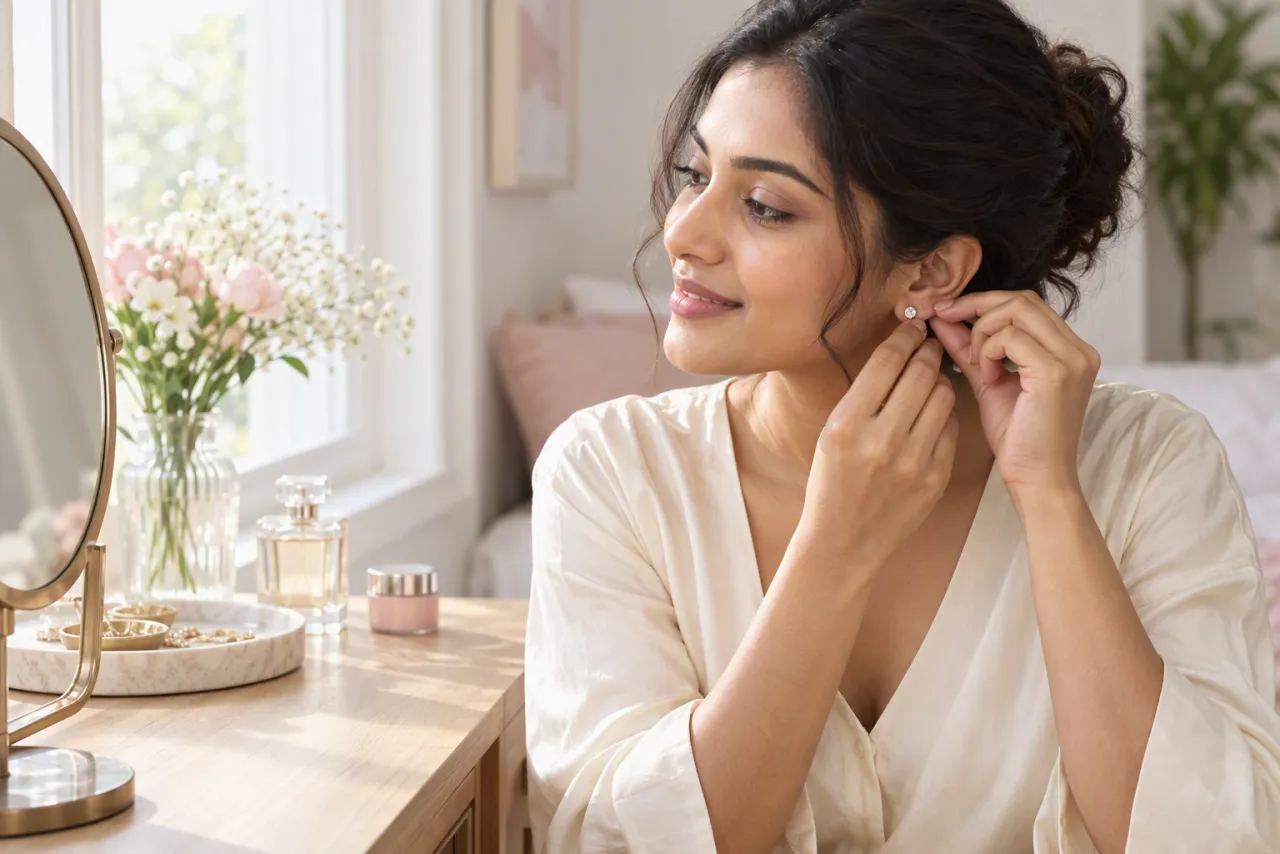
Put your jewellery on after cosmetics, lotion, hairspray and perfume, not before. GIA lists hairspray, perfume, cosmetics and perspiration among the substances that harm delicate gems such as pearls. Take jewellery off first when you get home.
When to take it off
- Swimming, in pools, hot tubs and the sea.
- Housework and cleaning, especially with bleach or other chemicals.
- Exercise, sport and gardening, where a piece can be knocked, bent or caught.
- Sleeping, when fine chains can tangle and settings can snag on fabric.
- Any work where the jewellery could catch, pull or take an impact.
Fine chains, pieces with small set stones and intricate open designs need extra care, because the details that make them delicate also make them easier to snag or bend.
Can silver get wet?
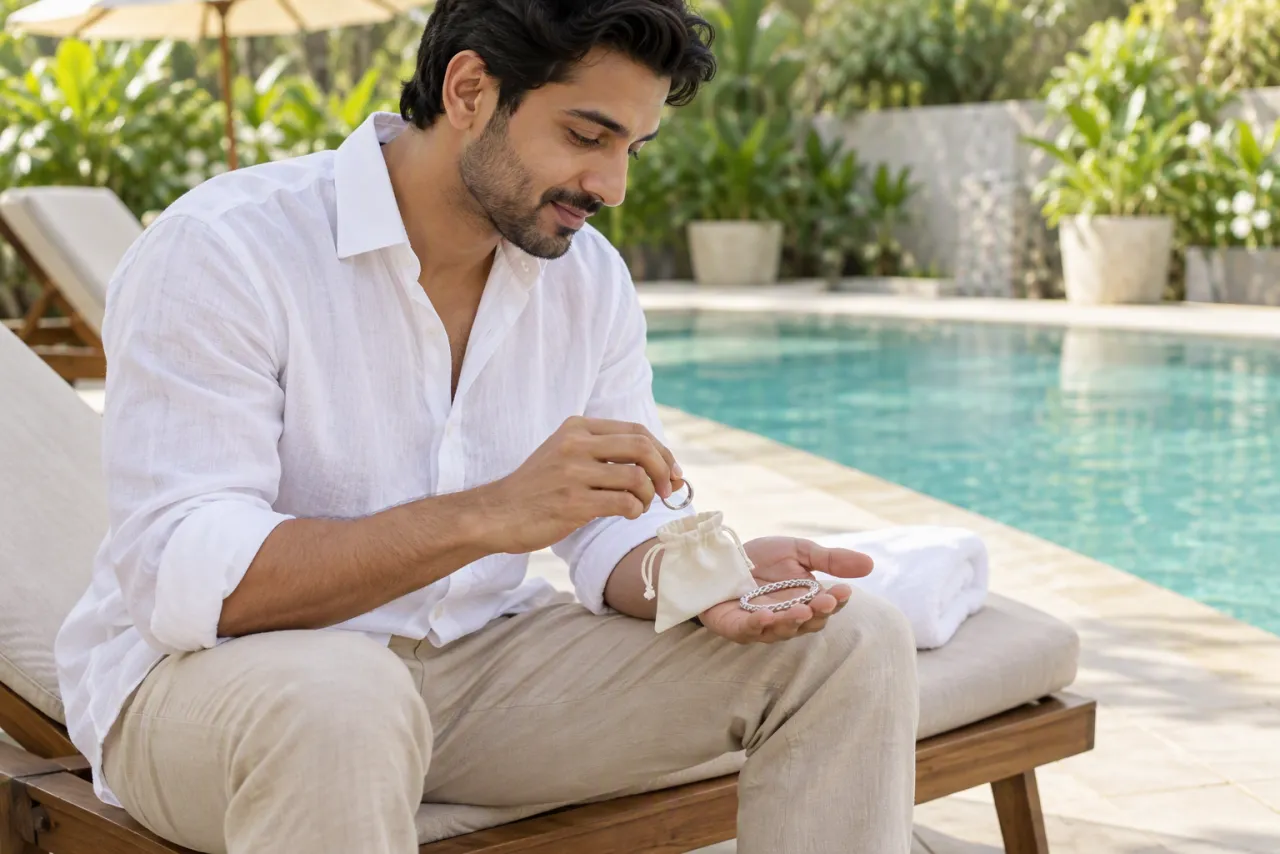
An occasional splash, such as washing your hands or getting caught in the rain, will not ruin silver jewellery. Silver does not rust as iron does.
Repeated or long exposure to water, especially combined with chemicals, is a different matter:
- Chlorine in pools, hot tubs and bleach can damage metal alloys and some gemstones.
- Salt from sea water and sweat contains chlorides, which can form silver chloride on the surface. It darkens over time.
- Glued settings, pearls and porous stones are more sensitive to water and chemicals than the silver itself.
After accidental exposure, rinse the piece in clean water if its stones allow it, dry it thoroughly and store it properly. Silver jewellery is jewellery, not waterproof equipment.
Sweat, heat and humid weather
Sweat contains salts and sulphur compounds, and humidity speeds up tarnish. In hot, humid weather and through the monsoon, wiping pieces after wear and storing them dry matters even more. Read why silver tarnishes.
Silver and sensitive skin
Nickel is the most common cause of metal contact allergy worldwide, and jewellery is one of the main sources of exposure. Sterling silver is an alloy of silver and copper rather than a nickel alloy. DermNet notes, though, that traces of nickel may be present in sterling silver, and plating layers, clasps, earring posts and other small parts can be made from different metals.
- If you know you react to nickel, check the full material description, including plating, clasps and posts, and see material questions for how to ask us about a specific piece.
- The European Union limits how much nickel jewellery may release: 0.2 µg/cm² per week for piercing posts and 0.5 µg/cm² per week for items in prolonged skin contact. These limits apply to products sold in the EU and show how seriously nickel exposure is taken.
- Itching, redness or a rash where jewellery touches the skin can signal contact allergy. Remove the piece and speak to a doctor or dermatologist.
Marks on the skin
A dark smudge under a ring, toe ring or bracelet has a name in medical literature: black dermographism. Hard powders on the skin, such as talcum powder or dust, abrade tiny particles of metal from the jewellery and deposit them on the skin. Sulphur-containing compounds in sweat can also react with the metal. It has been reported with silver, gold and other metals. It is harmless, washes off with soap and water, and is not a sign that the silver is fake. Keeping skin and jewellery clean, and putting jewellery on after powders and make-up, both help.
If a mark comes with itching, redness or a rash, treat it as a possible skin reaction rather than a stain, and seek medical advice.
Sources
General education, checked against these published standards and references. Each product page states that piece's own materials and care.
- GIA: Pearl care and cleaning, cosmetics, hairspray, perfume and perspiration
- GIA: Turquoise buyer's guide, put jewellery on after cosmetics and lotion
- GIA: Keeping jewellery clean, chlorine and bleaching agents
- Canadian Conservation Institute: Metal objects, silver chloride from fingerprints
- Canadian Conservation Institute: Understanding how silver objects tarnish
- DermNet: Jewellery allergy
- Ahlström and others, Nickel allergy and allergic contact dermatitis: a clinical review, Contact Dermatitis, 2019
- REACH Annex XVII entry 27: nickel release restriction
- Black dermographism: an uncommon cause of skin discoloration, Indian Dermatology Online Journal, 2018
Next: Why silver tarnishes
What tarnish is chemically, why it turns yellow, brown and then black, and what in everyday life speeds it up.