


Silver · Care
Clean gently. Store dry.
Good habits do more for silver than any occasional deep clean. Every polish removes a tiny amount of metal, so the aim is gentle cleaning and storage that slows tarnish down in the first place.
Last reviewed
Before you clean anything
Look closely at the piece first. The right method depends on what it contains, not just on the fact that it is silver. Take extra care if it has:
- Gemstones, especially pearls, emeralds, opals, turquoise or other delicate stones.
- Plating, such as rhodium, gold or rose gold.
- An oxidised finish, where darker areas are part of the design.
- Enamel, glued components or hollow parts.
- Fine texture or engraving.
Everyday cleaning
- Wipe gently with a soft, clean, lint-free cloth after wearing, while sweat and residue are still fresh.
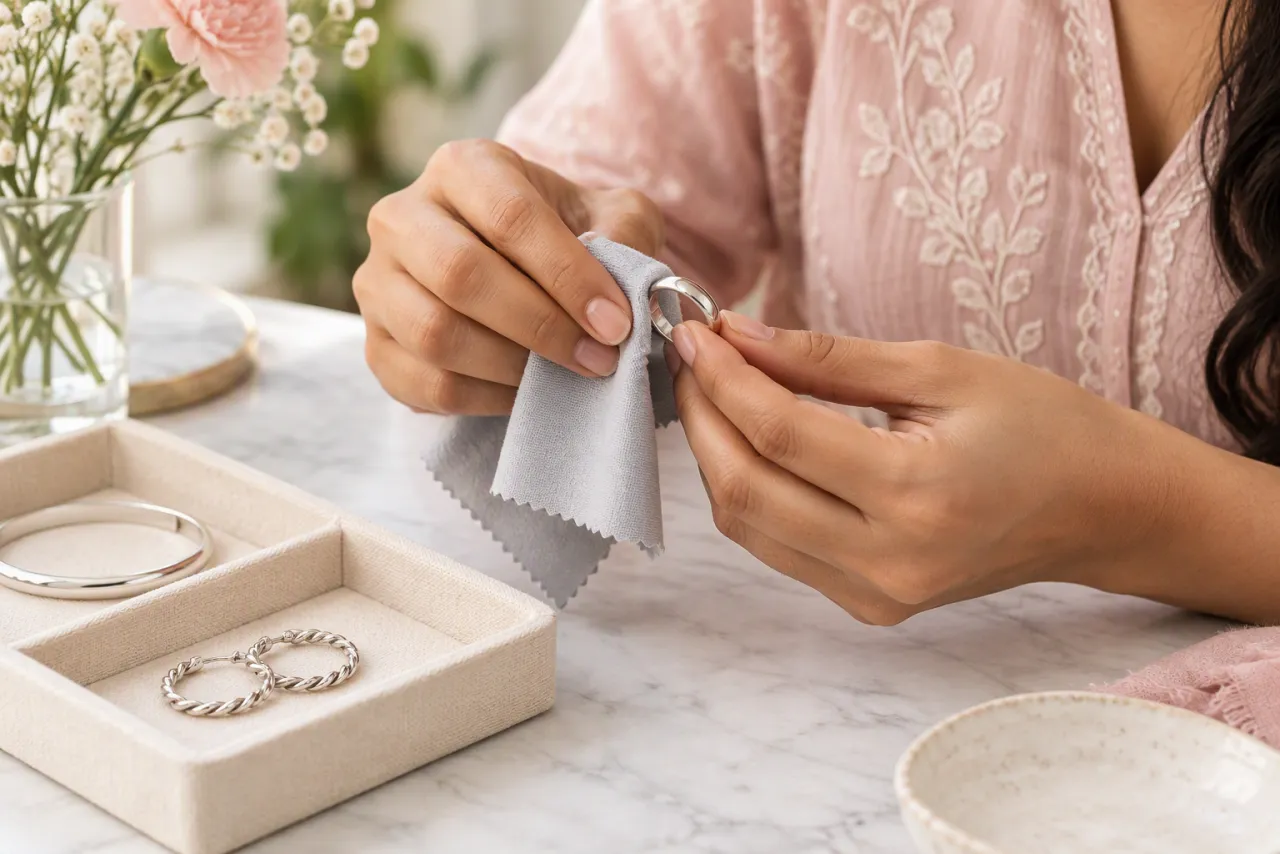
- For light tarnish, use a silver polishing cloth. Work gently along the shape of the piece rather than pressing hard.
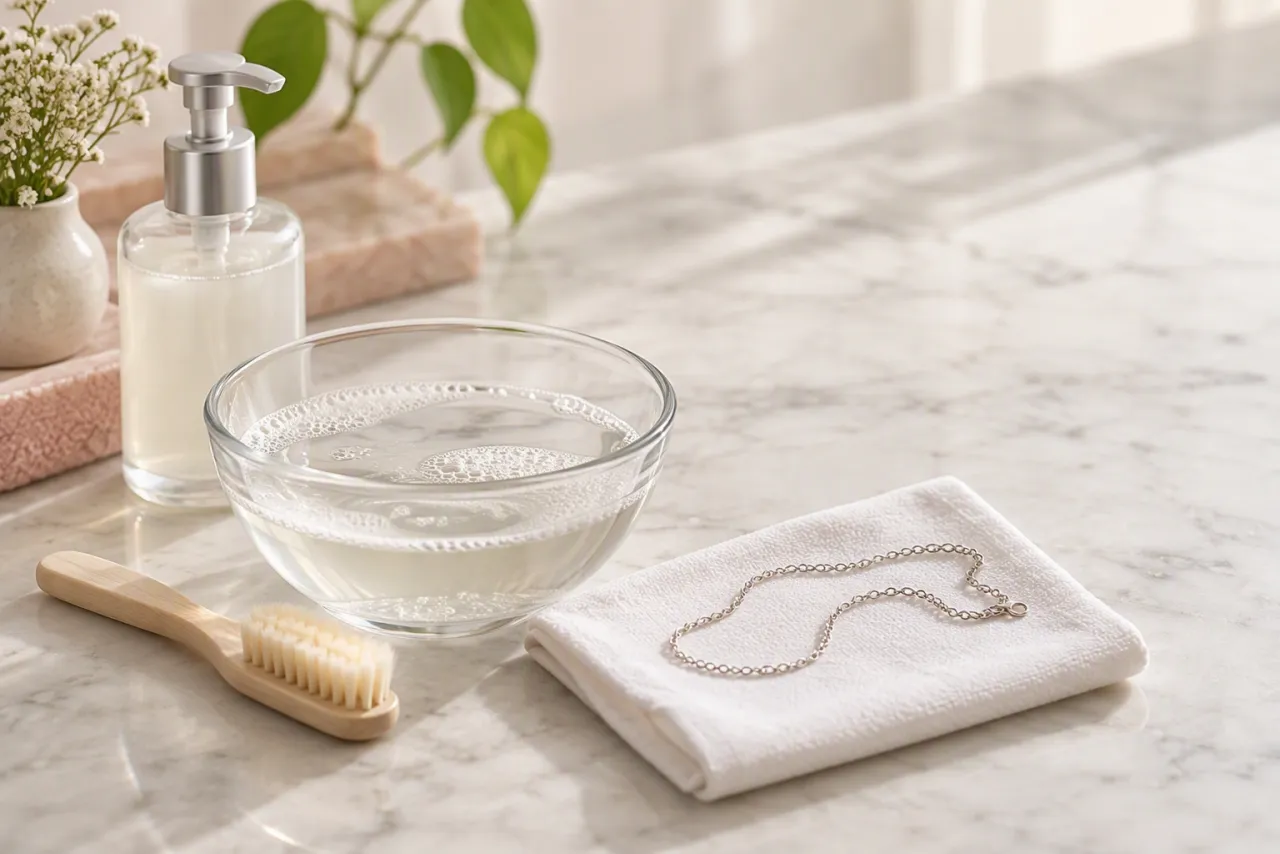
- For grime, wash in warm water with a little mild dish soap, using a very soft brush around settings and chain links. GIA describes this as a good choice for most gemstones and jewellery. Pearls and other delicate stones need their own care instructions.
- Rinse and dry completely with a soft cloth before putting the piece away. Moisture sealed inside a pouch encourages tarnish.
What to avoid
- Chlorine bleach. It damages metal alloys and some gemstones.
- Toothpaste and household cleansers. They are abrasive and leave fine scratches.
- General-purpose metal polishes. They are more abrasive than silver polishes and remove more silver.
- Rough brushes and hard scrubbing, which can wear plating, engraving and intentional finishes.
- Silver dips on plated, decorated or oxidised pieces. Dips strip a surface layer: on a rhodium or gold-plated piece that layer is the finish, and on decorated silver they strip the darker tone from recesses.
- Ultrasonic and steam cleaners at home. GIA does not recommend them for home use. They can loosen stones and damage pearls, organic gems and fracture-filled, oiled or heat-sensitive stones.
About the aluminium foil method
A popular home method places silver in contact with aluminium in a hot soda solution. The Canadian Conservation Institute's version uses washing soda, not baking soda. It works electrochemically, turning tarnish back into silver instead of removing it. It has real drawbacks for jewellery:
- It can leave a dull, matte finish, because the recovered silver is left as rough particles.
- Treated pieces may tarnish more quickly afterwards.
- It is not suitable for hollow pieces or pieces with glued or organic parts.
- The same chemistry removes the deliberately darkened areas of oxidised designs.
For jewellery with stones, plating or special finishes, a professional jeweller is the safer choice.
How to store silver
- Keep it dry. Humidity speeds up tarnish, so avoid storing silver in bathrooms.
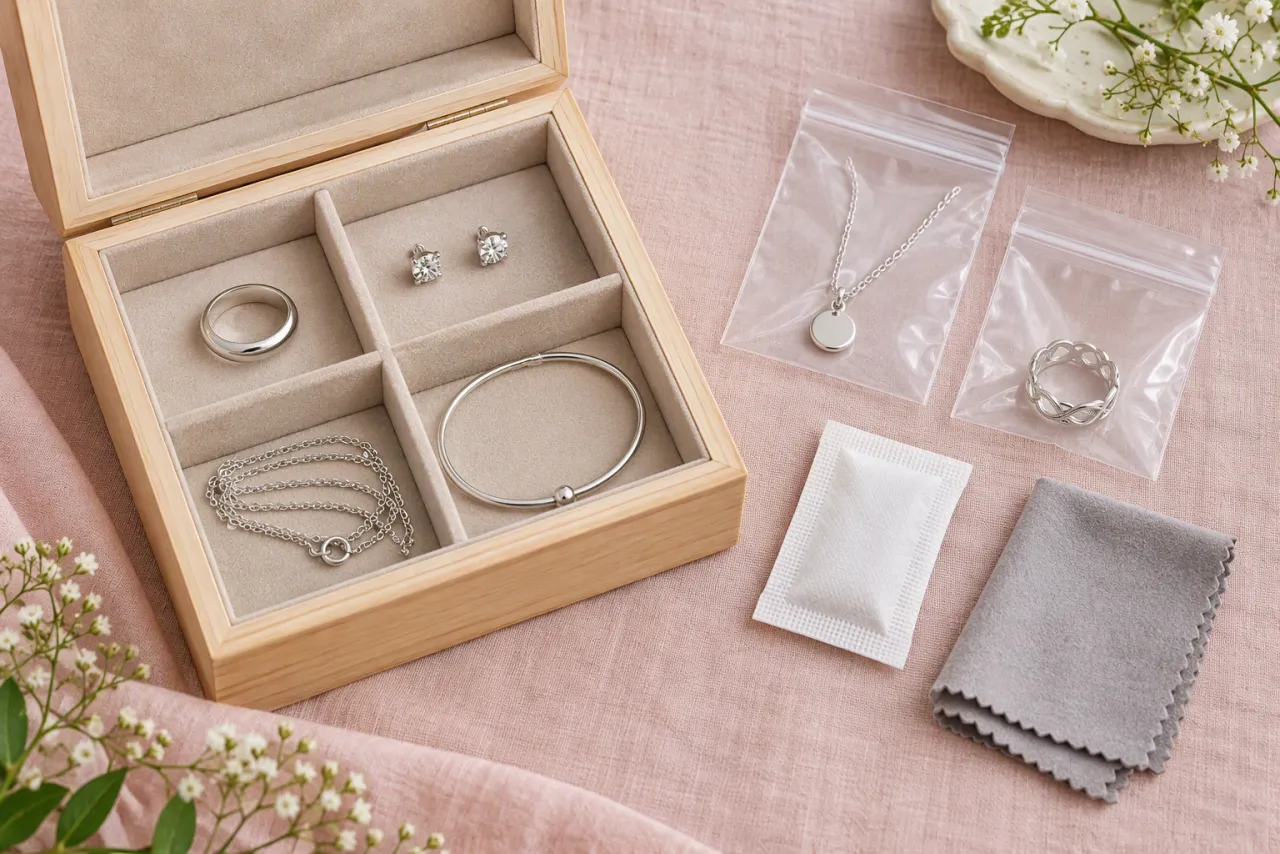
- Store pieces separately. Chains, rings and earrings scratch and tangle each other when they move around loose.
- Seal it in. For pieces you will not wear for a while, conservators recommend sealed polyethylene bags, such as zip-lock bags, to limit contact with air.
- Add an absorber. A small sachet of silica gel absorbs moisture. Activated charcoal helps absorb the sulphur gases that cause tarnish. Anti-tarnish strips are another option.
- Use the right wrapping. Anti-tarnish silver cloth, which is embedded with fine silver particles, is designed to protect silver. Acid-free, unbuffered tissue paper is also suitable.
- Avoid rubber, wool and felt. Rubber bands and wool or felt linings give off sulphur compounds.
- Keep chemicals away. Store jewellery away from perfume, cosmetics and cleaning products, ideally in a separate drawer.
The 30-second routine
After every wear:
- Remove the piece, especially before sleeping, exercise or housework.
- Wipe away sweat and moisture with a soft cloth.
- Dry it completely.
- Store it in its pouch or box.
- Separate it from other pieces.
Wear it, wipe it, store it. Repeated every time, this habit keeps silver looking good for far longer than an occasional deep clean.
Sources
General education, checked against these published standards and references. Each product page states that piece's own materials and care.
- Canadian Conservation Institute Notes 9/7: Care of silver
- Canadian Conservation Institute Notes: Storage of metals
- Canadian Conservation Institute: Understanding how silver objects tarnish
- Winterthur Museum: Caring for your collections, silver conservation tips
- GIA: Keeping jewellery clean
- GIA: How to clean your diamond jewellery, avoid chlorine and abrasives
- GIA: Gems and ultrasonic cleaners
- GIA: Diamond care and cleaning
- GIA: Pearl care and cleaning
Back to the start
What the number 925 states, and why jewellery is alloyed at all.