


Silver · Choose
Choosing for how it is worn.
Start with the person and how the piece will be worn, not the price tag. The right piece for every day is often very different from the right piece for one evening.
Last reviewed
For everyday wear
- Simple, understated designs that go with most outfits.
- A comfortable weight that still feels light at the end of a long day.
- Secure clasps and closures that do not open easily.
- Sturdy construction with fewer fine parts that can catch or bend.
- Polished or plated finishes that are easy to wipe clean.
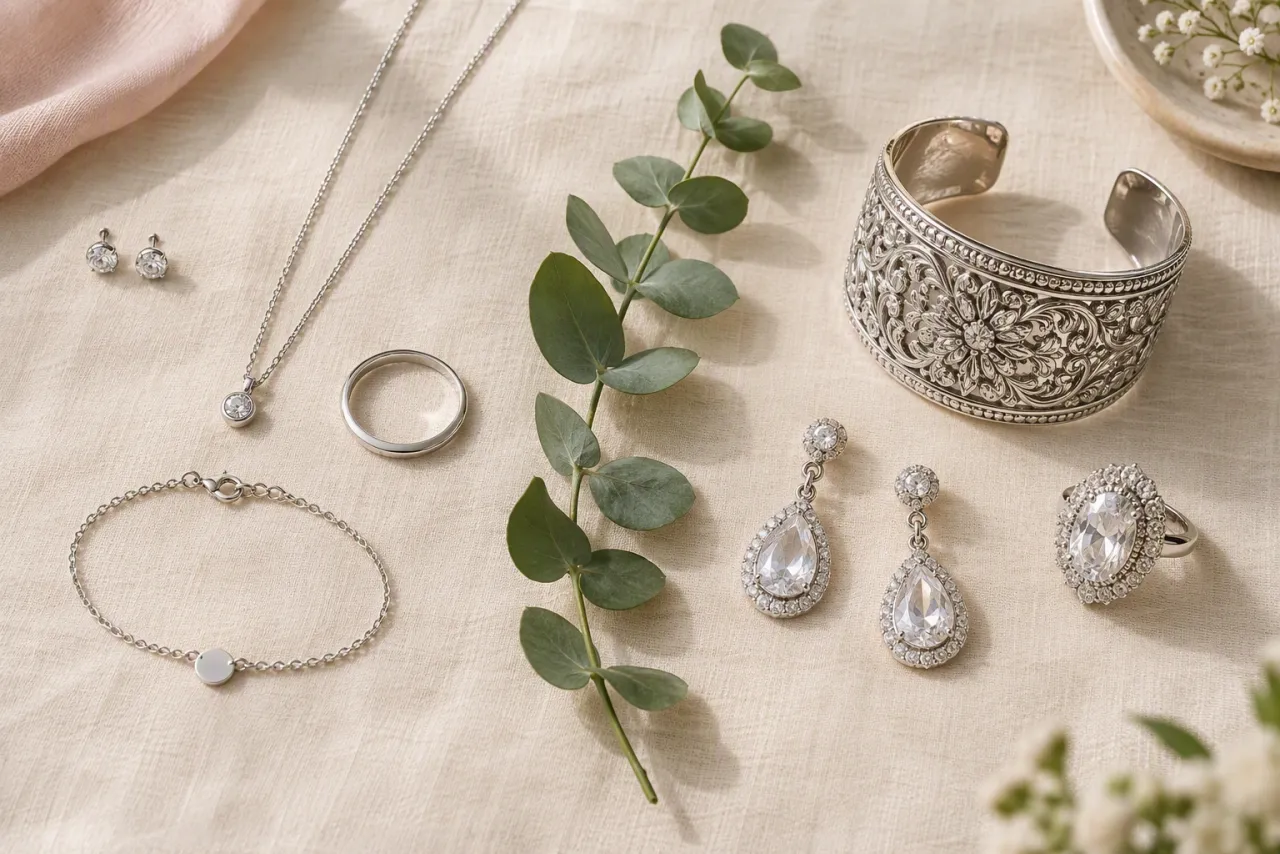
For occasions
- Larger, more visible designs and statement pieces.
- Detailed craftsmanship and more decorative finishes.
- Stones for sparkle and colour.
For gifting
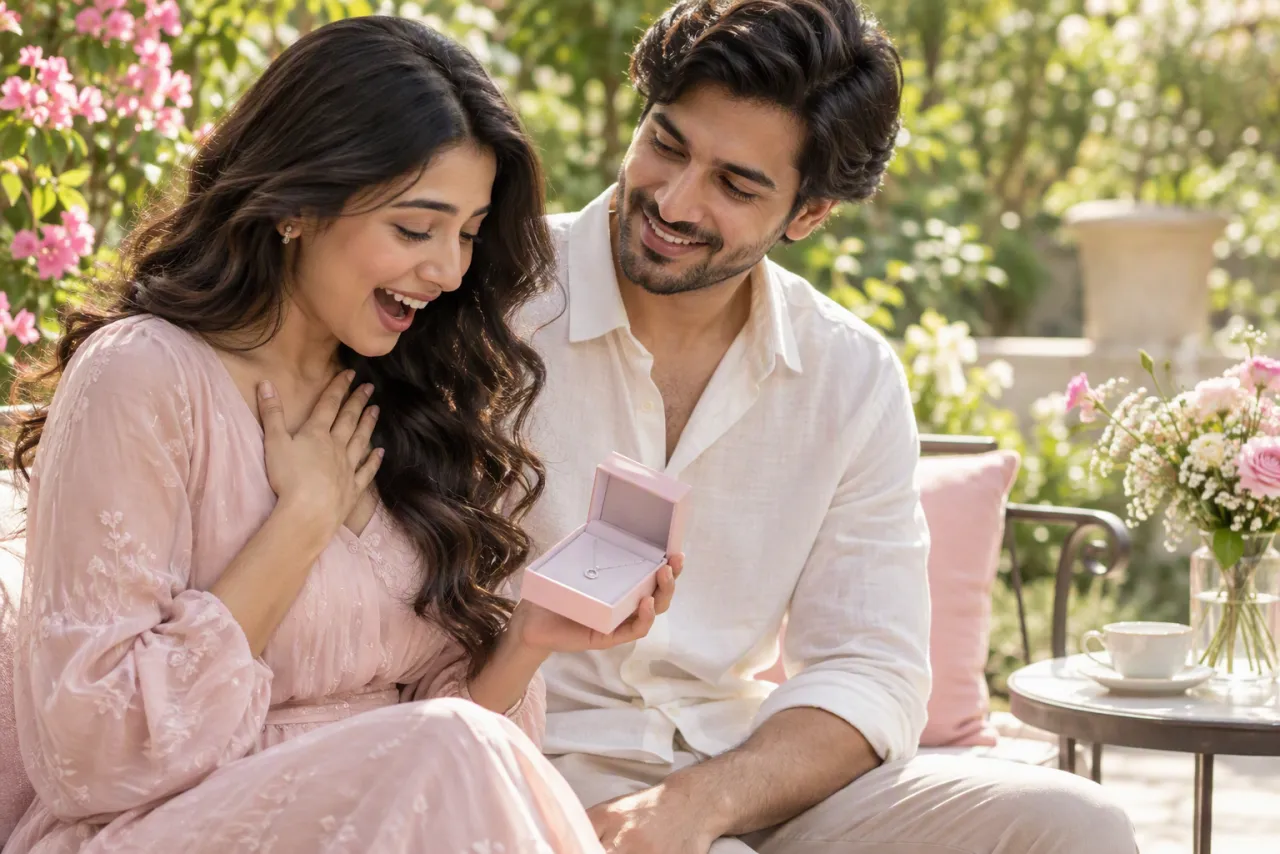
Silver suits birthdays, anniversaries, weddings, Raksha Bandhan, Diwali and other festivals, Valentine's Day, Mother's Day, graduations and personal milestones, and gifts with no occasion at all. A piece that can be worn often becomes linked with the person or moment it was given for.
Before you choose, think about:
- The recipient's own style, age and lifestyle.
- The jewellery they already wear: rings, earrings, pendants or bracelets.
- Size, particularly for rings and bangles. Borrow a ring they already wear on the same finger and use the ring size guide.
- Whether they have metal sensitivities. See wearing silver every day.
- Packaging and presentation.
- The return and exchange policy, in case the size or style needs to change. Read ours in the returns policy.
Your first silver pieces
Stud earrings, a small pendant, a fine chain or a minimal bracelet are easy first choices. They work with a wide range of outfits, and they are hard to get wrong.
Why weight matters
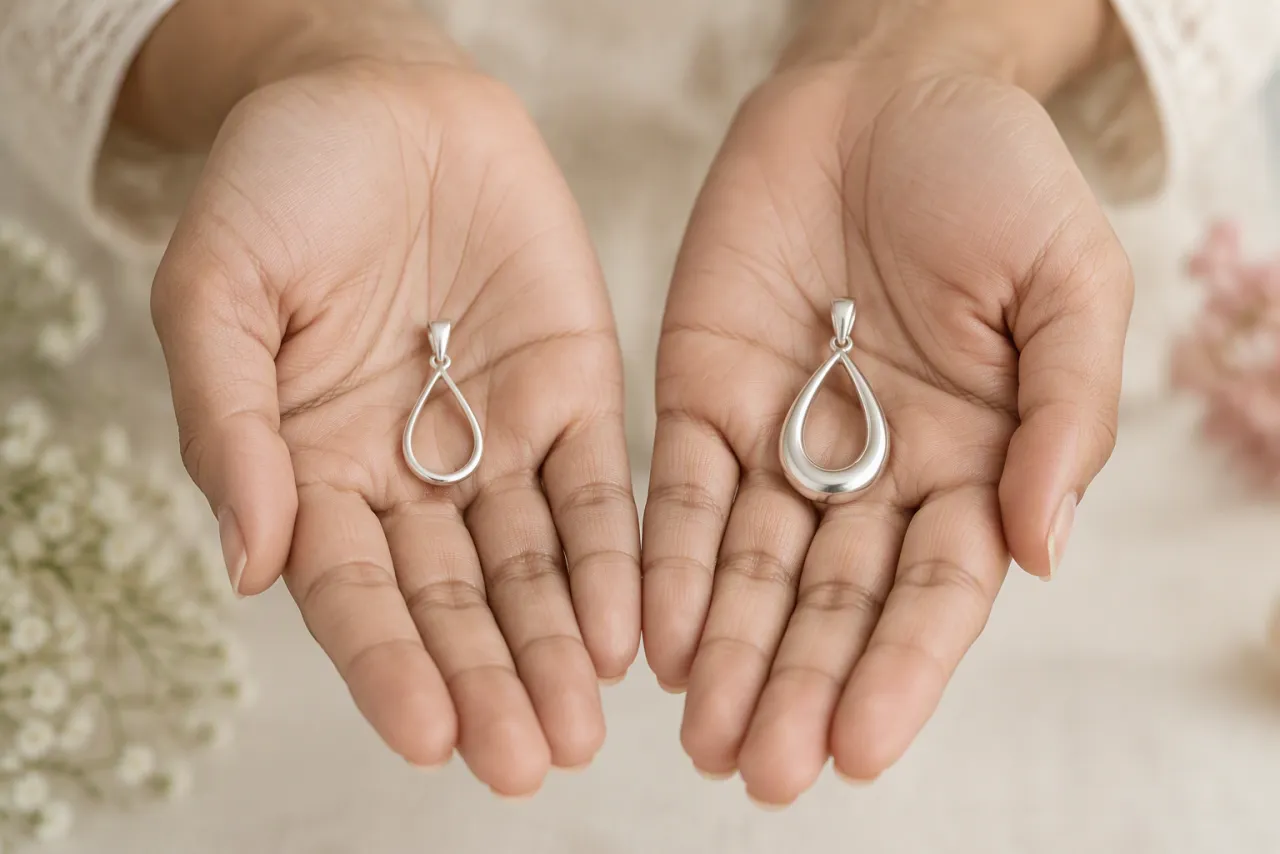
Weight tells you roughly how much metal went into a piece, which a photograph cannot. Two pendants can look almost identical on screen and still differ a great deal: one at 1.5 g and another at 4 g will feel different in the hand and are usually priced differently.
Weight is not the only measure of value. A lighter piece may carry more intricate work, set stones or a deliberately delicate design that is harder to make than a simple heavy one. A heavier piece is not automatically better; it may just be thicker and plainer.
What goes into the price
The price of silver jewellery is not set by the market price of silver alone. The international benchmark, the LBMA Silver Price, is quoted in US dollars per troy ounce, about 31.1 grams, and a finished piece involves much more than metal. That is why two pieces with a similar amount of silver can be priced very differently.
- Silver content. The weight of metal and its fineness.
- Making. Casting, forming, setting, polishing, assembly and finishing.
- Design complexity. Intricate designs take more time and skill.
- Stones and other materials. Their type, size, quality and the work needed to set them.
- Plating and finishing. Rhodium or gold plating and other surface treatments add their own cost.
- Packaging. Boxes, pouches and care cards.
- Tax. In India, GST is charged on the full value of a piece of jewellery, whether or not making charges are shown separately.
- Operating costs and brand. Delivery, customer care, quality checks, design and service are all part of what you pay for.
Because so much besides metal goes into a finished piece, price on its own is not a reliable test of quality or authenticity.
How to read a product description
A good product description answers your questions before you need to ask them. Look for:
- Product type. For example, a sterling silver pendant.
- Metal and fineness. For example, 925 sterling silver, stated clearly rather than implied.
- Weight. Where given, usually approximate.
- Dimensions. The size of a pendant or stone, a chain length, or a band width.
- Stones. What each stone is, and whether it is natural, lab-grown or synthetic. Read plating, finishes and stones.
- Plating. Any rhodium, gold or rose-gold plating, stated rather than left to the photographs.
- Finish. High polish, matte, textured or oxidised.
- Hallmark or certification. Whether the piece carries a hallmark, and what it shows.
- Care instructions for that specific piece.
- What is included. For example, the jewellery, a box and a care card.
- Delivery and returns. You should be able to understand the policy before buying, not only afterwards.
Silver jewellery and imitation jewellery
Genuine silver jewellery contains silver throughout, at its stated fineness. Imitation or fashion jewellery reproduces the look of fine jewellery in base metals or other materials. It usually costs less, and it offers a wider, faster-changing range of trend-led designs.
Neither is the right choice for everyone. What matters is that you know exactly which material you are buying, and that imitation jewellery is never described as silver.
How long silver jewellery lasts
Silver does not expire. A well-made piece that is cared for can be worn for many years and passed on. Clasps, chain links and stone settings carry the most mechanical wear, so they may need attention over time, even on a piece that is otherwise in good condition. That is normal wear, not necessarily a sign of poor quality.
Sources
General education, checked against these published standards and references. Each product page states that piece's own materials and care.
- LBMA: Silver price FAQ
- GST Council, Central Board of Indirect Taxes and Customs: Sectoral FAQs for gems and jewellery
- GST Council: 56th meeting rate recommendations, September 2025
- US Code of Federal Regulations, 16 CFR 23.25: disclosure of laboratory-created stones
- Press Information Bureau, Government of India: HUID-based silver hallmarking, December 2025
Next: Wearing silver every day
When to take jewellery off, water, chlorine and sweat, nickel sensitivity, and the dark marks silver can leave on skin.