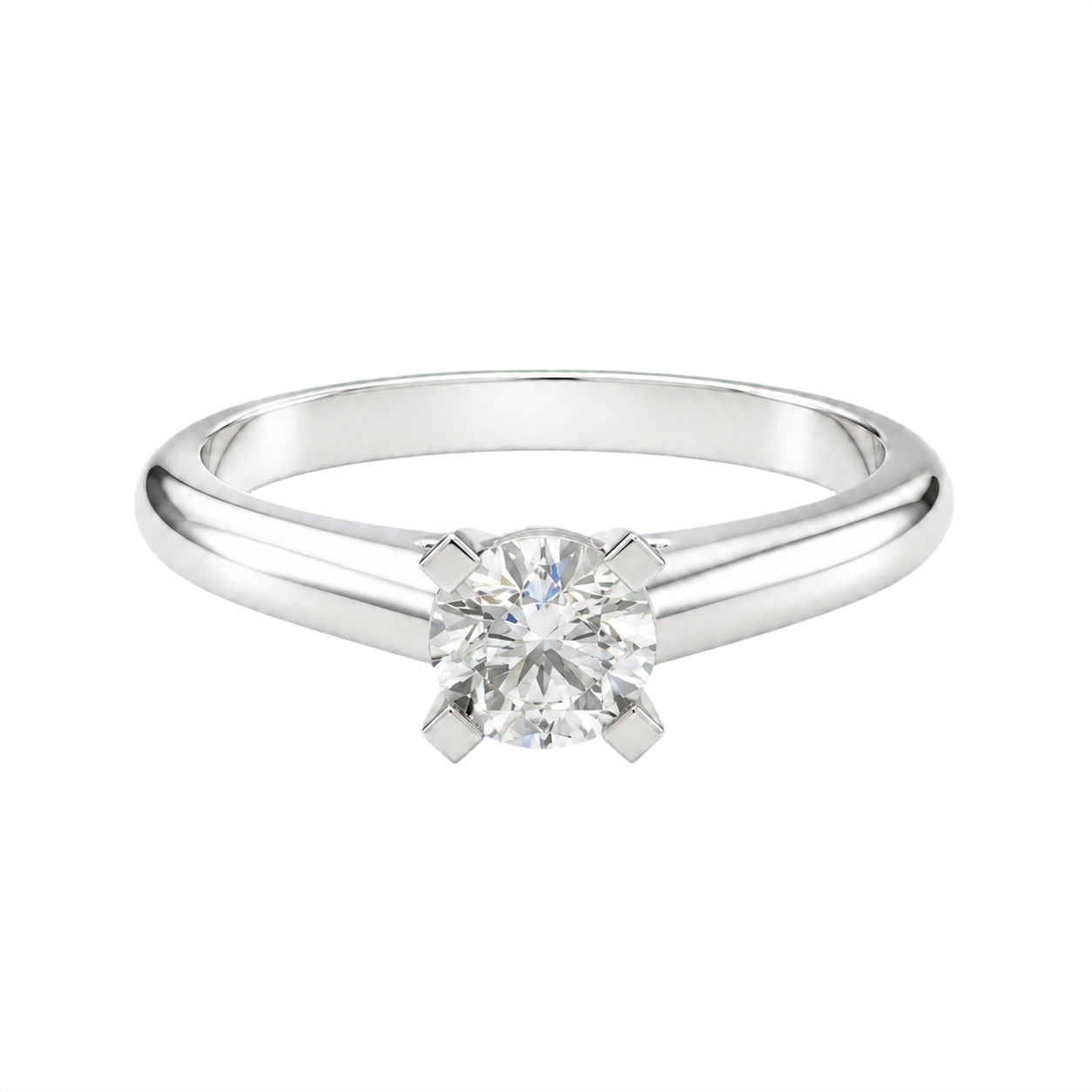
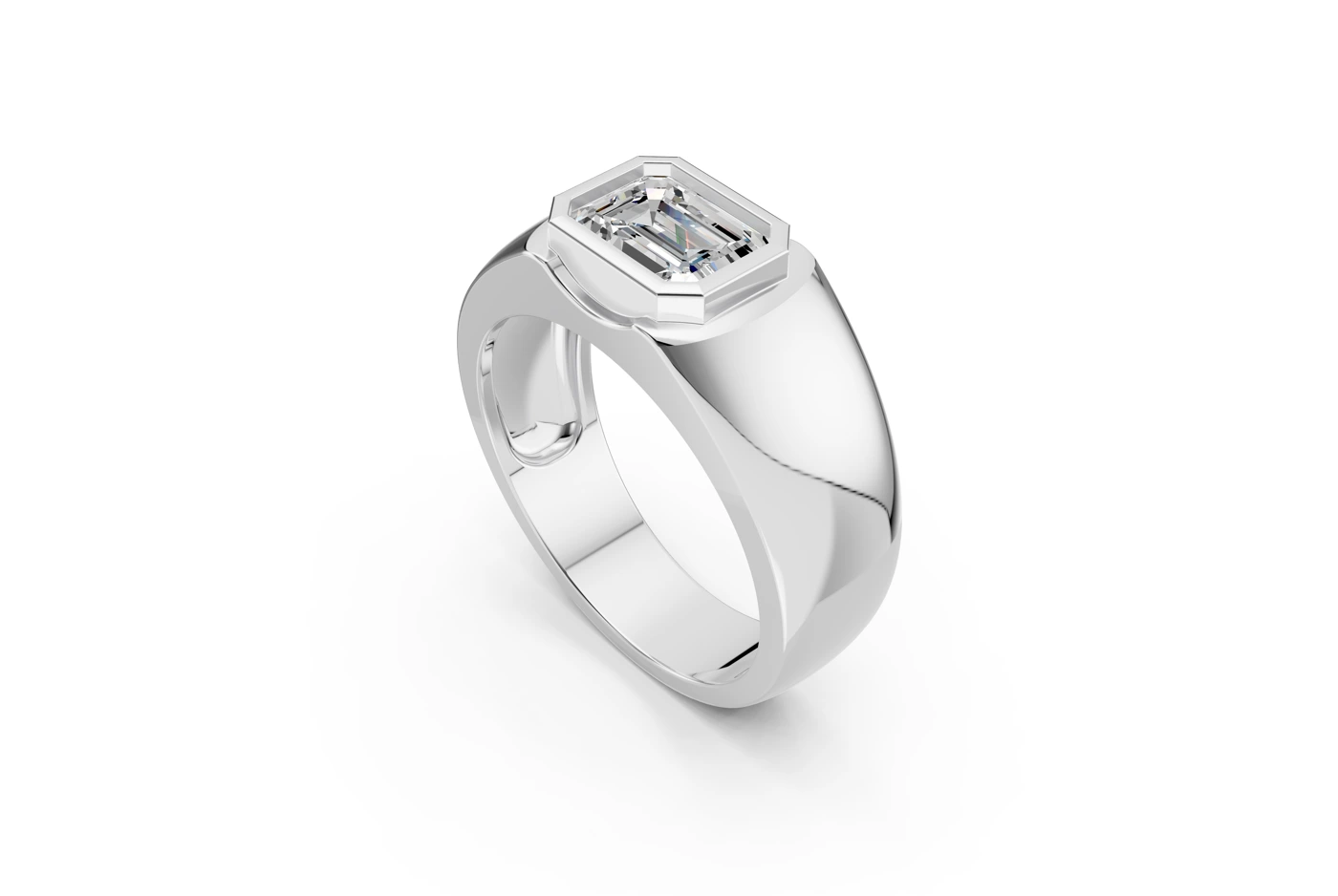
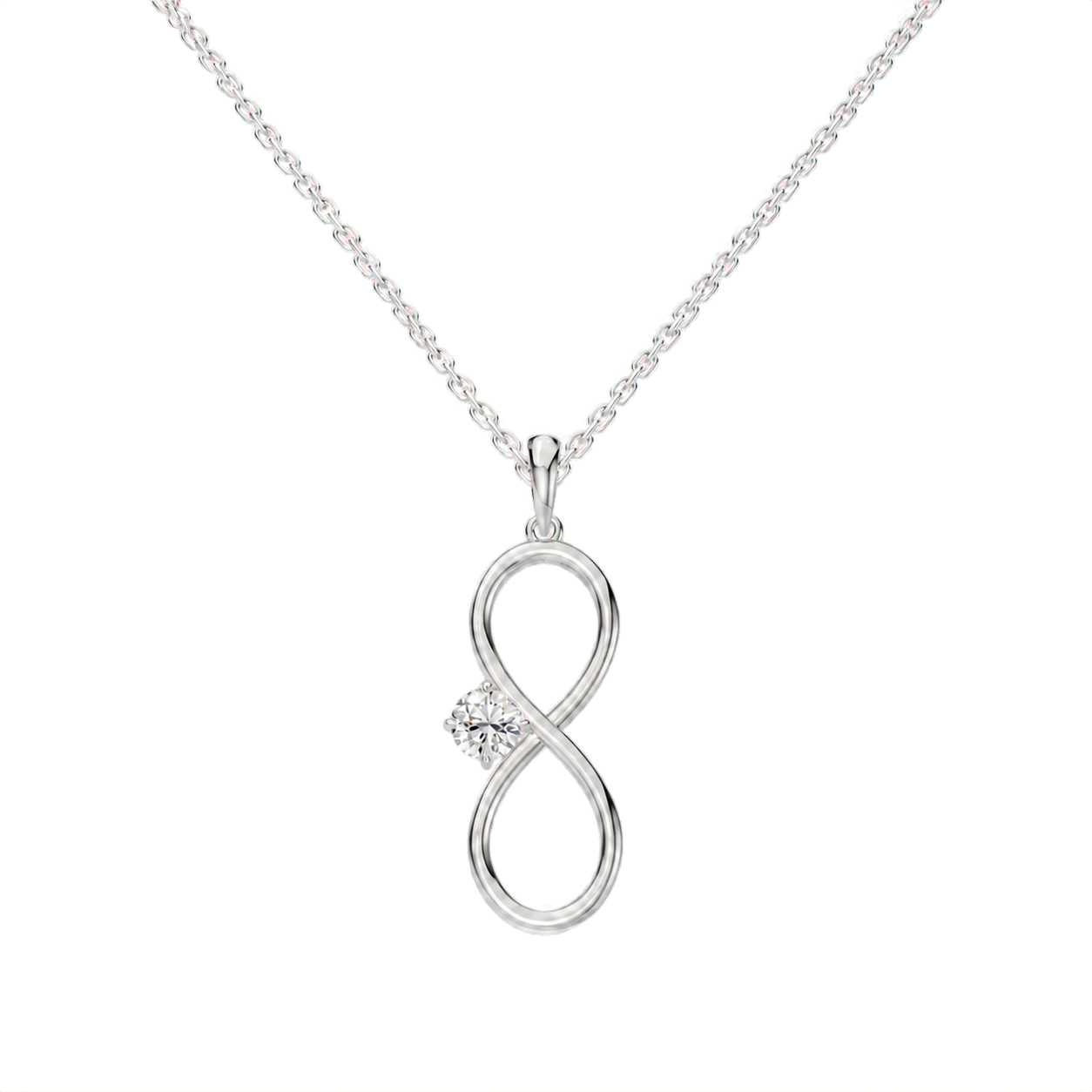
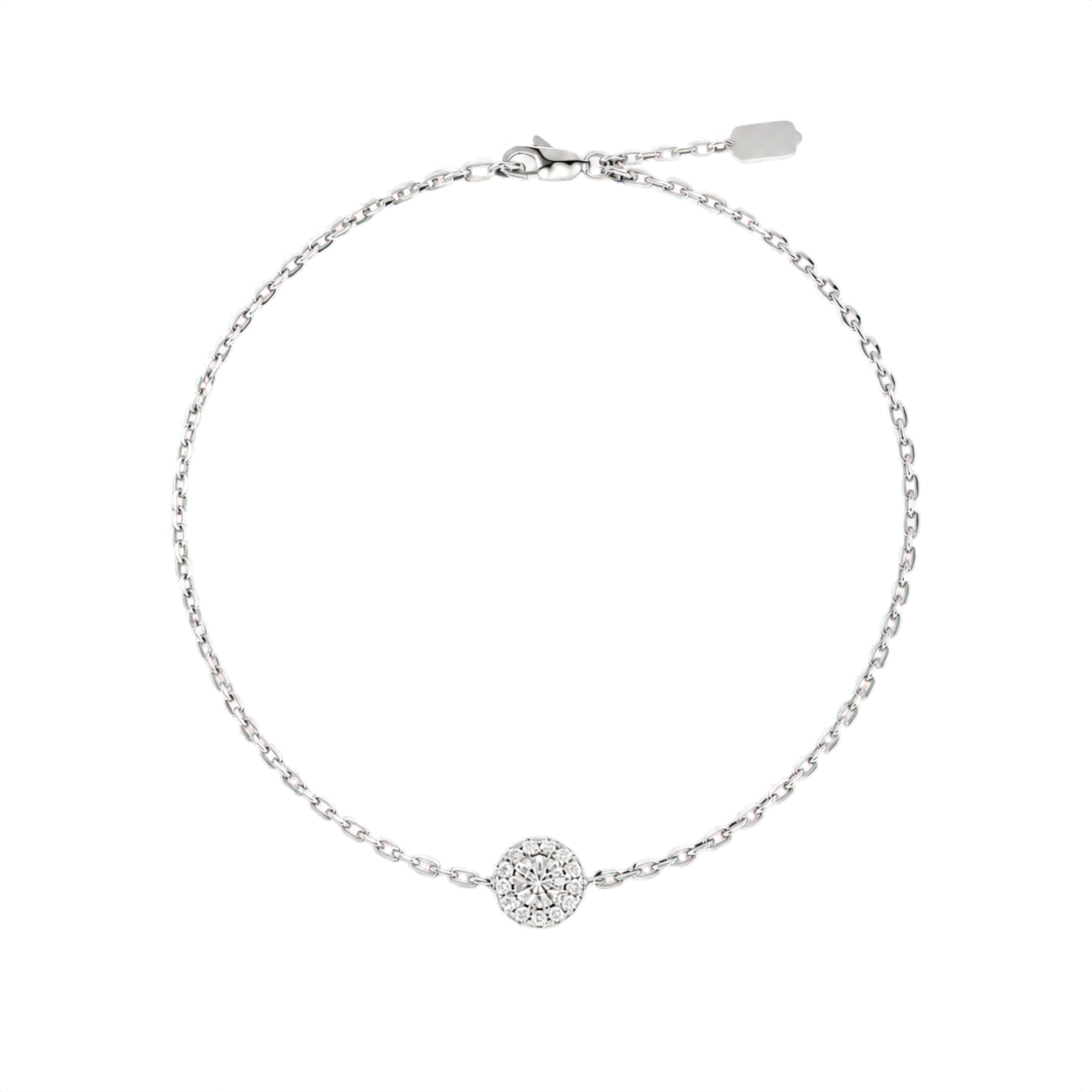
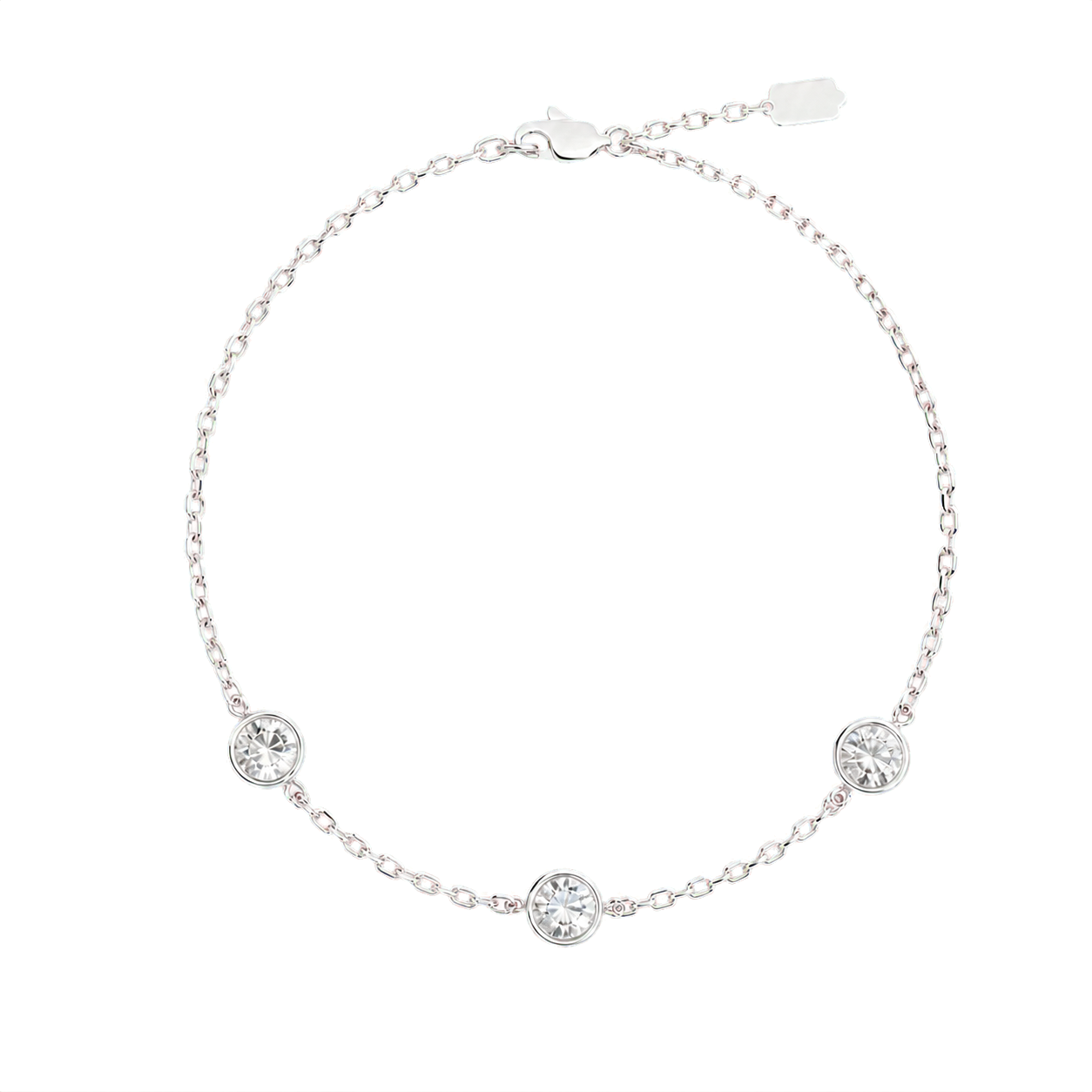
The setting is the metalwork that holds a stone in place. It decides how much light reaches the stone, how secure it is, how it feels against a sleeve - and much of what a piece costs to make. Eight you will meet often, and what each is actually like to wear.
Solitaire
A single stone raised on its own, held by fine claws - prongs - that grip its edge at three, four or six points.
The most light reaches the stone in this setting, because so little metal touches it. The trade is exposure: claws can catch on knitwear and should be checked once a year for movement.
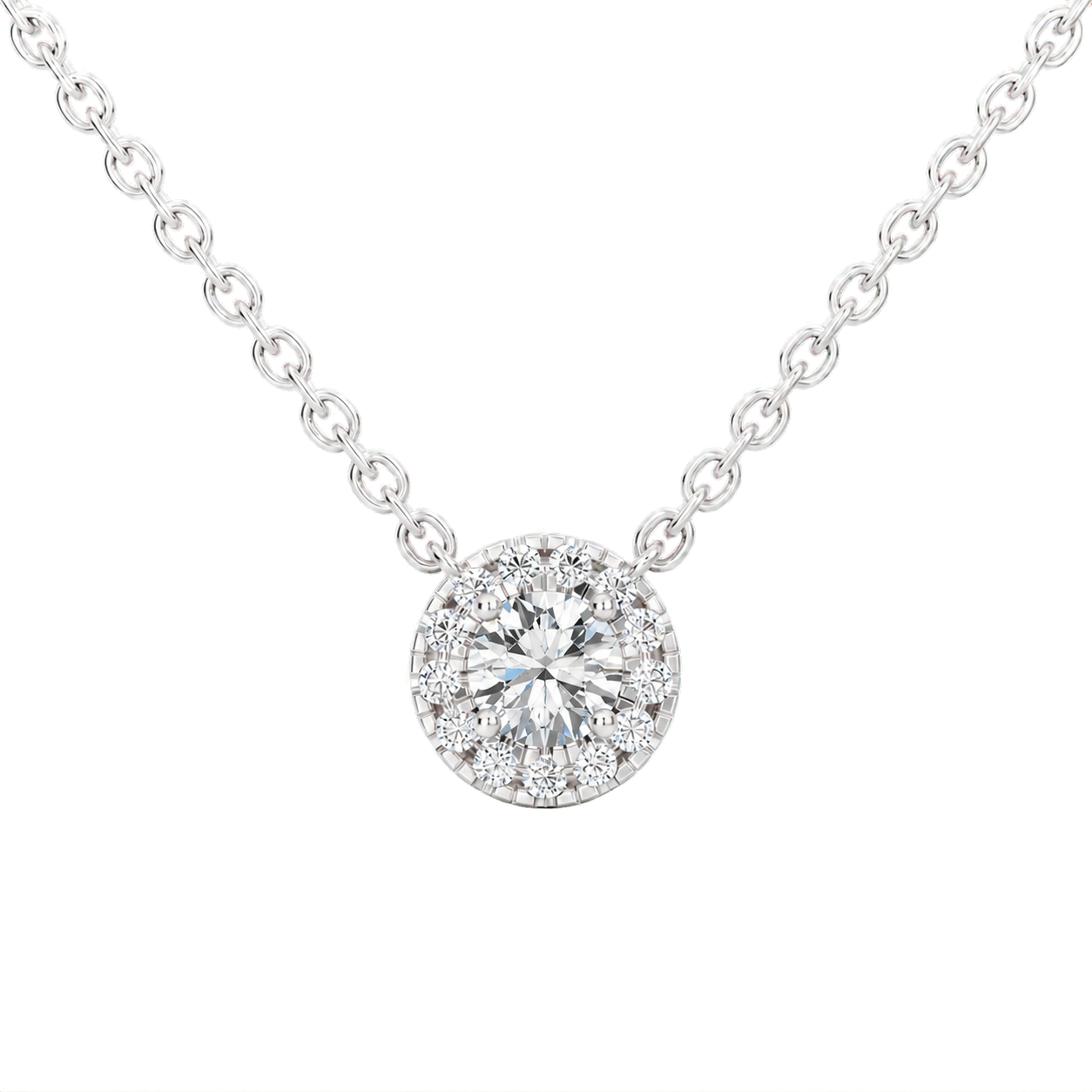
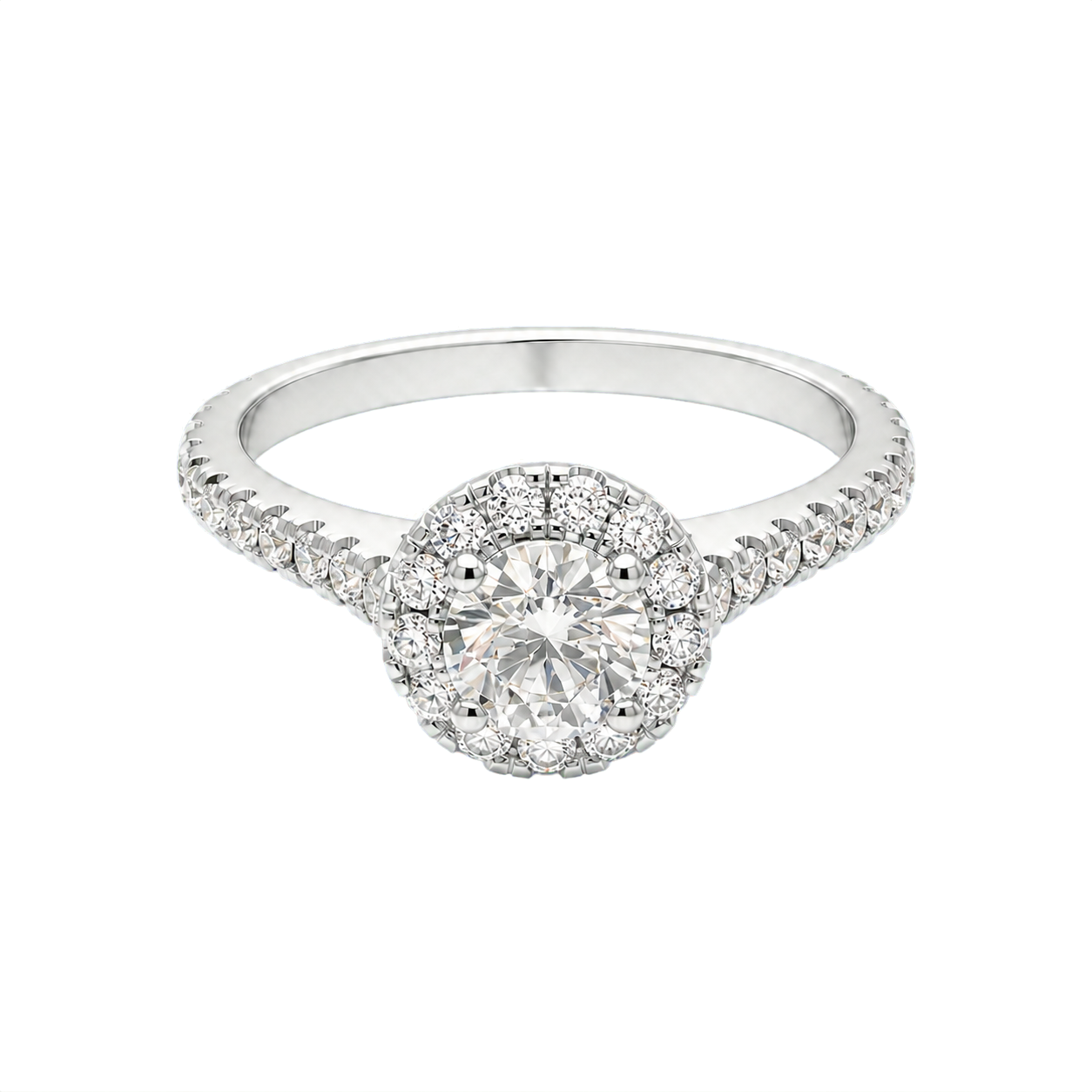
A centre stone encircled by a ring of much smaller stones.
The halo makes the centre stone read considerably larger than it is, and the outer stones take the knocks a bare girdle would. More crevices to clean, so a soft brush earns its place.
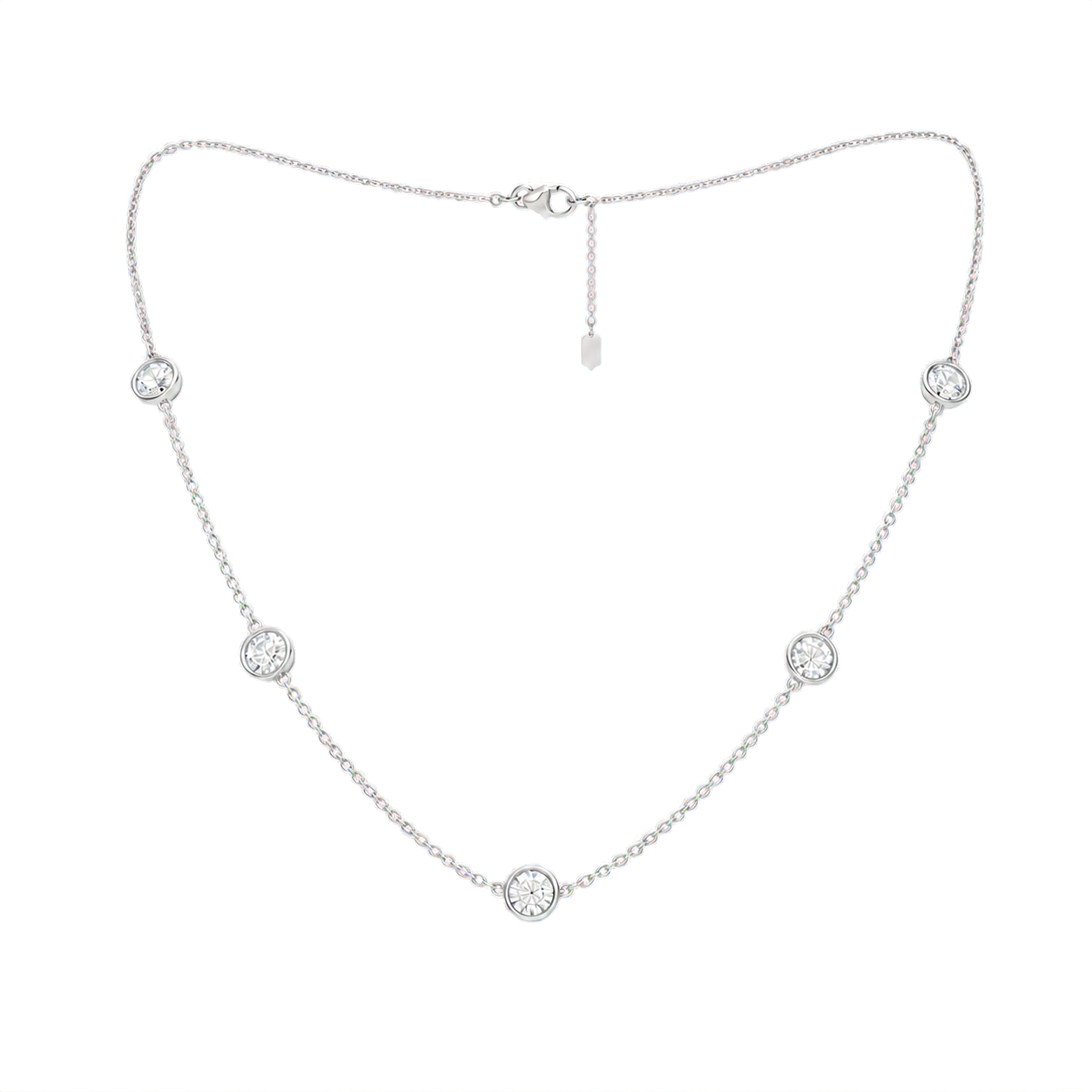
A continuous rim of metal wrapped around the stone's girdle, holding it like a frame.
The most protective setting there is, and the one that never snags - the reason it suits a bracelet, an everyday ring, or anyone who works with their hands. Slightly less light enters from the sides.
Pavé
Many tiny stones set close together in small beads of metal, so the surface reads as stone rather than silver.
It gives a continuous shimmer across a band. The beads are small, so avoid knocks and have the row checked if a stone ever feels proud of the surface.
Channel
Stones sunk in a groove between two walls of metal, with no prongs between them.
Smooth to the touch and very secure, which makes it a common choice for a band worn every day. The channel collects lotion and soap, so rinse and dry it properly.
Tennis
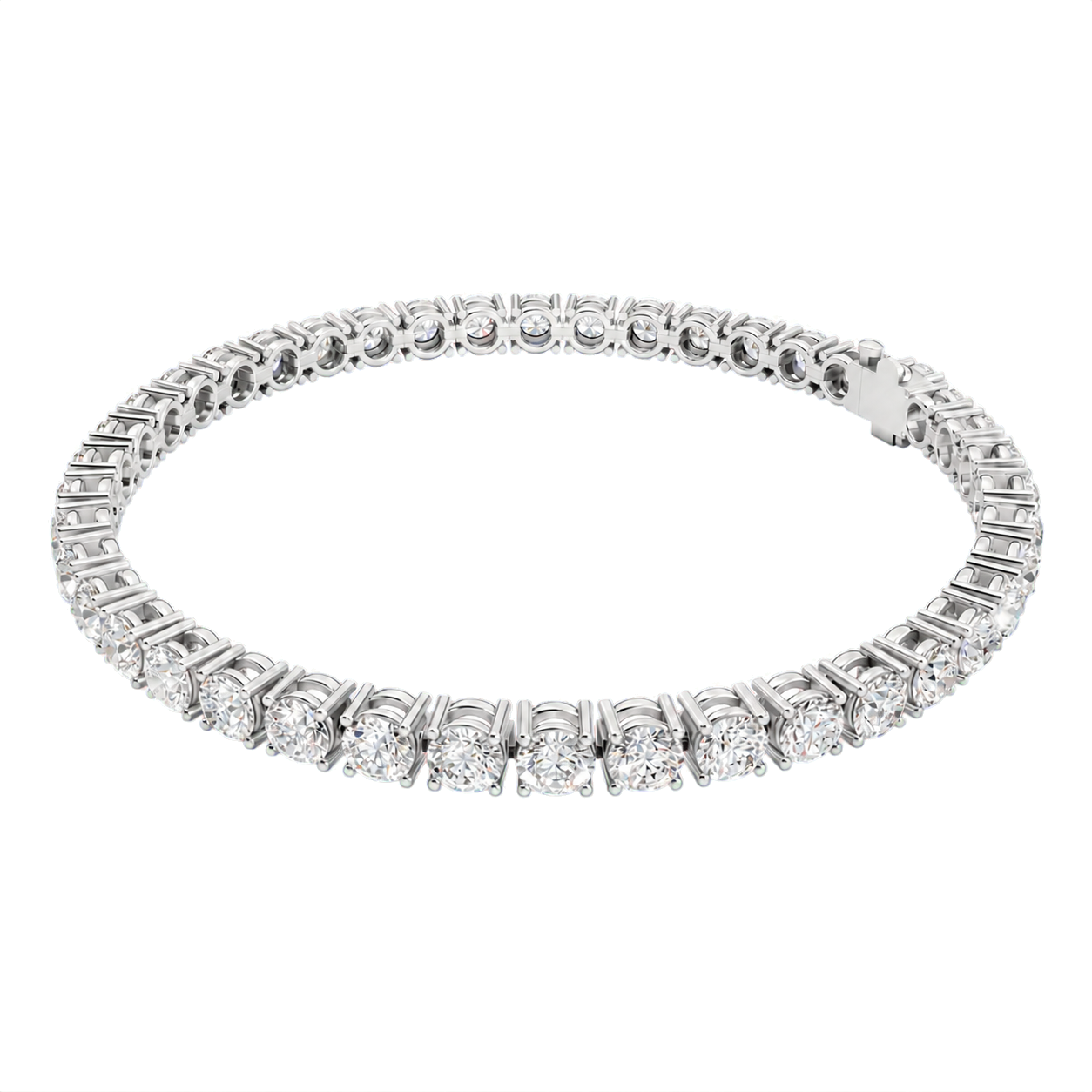
A continuous line of matched stones running the full length of a bracelet or necklace, each in its own small setting, linked flexibly.
It moves and catches light along its whole length. Because every link matters, check the clasp and the safety catch before wearing it out.
Several small stones grouped tightly so that together they read as one larger shape.
It gives presence without a large centre stone. Like a halo, it rewards a soft brush between the stones.
A note on cleaning
The more places a setting has for a stone to sit in, the more places there are for soap, lotion and skin oil to collect. A halo, a cluster and a pavé band all reward a very soft brush; a bezel almost never needs one. What none of them want is a silver dip, which strips a rhodium finish along with the tarnish.